Farm-Fresh Salad Bowls & Greens
5 items in this category.
A restaurant salad can be one of the lightest things on the menu or one of the heaviest, depending entirely on what's added to it. Dressing, cheese, fried toppings, and candied nuts change the numbers fast.
This page explains what goes into salad bowls, how dressings differ, which proteins are worth adding, and how to keep a salad genuinely light if that's the goal.
Salad & Bowls Menu
Salad & Bowls
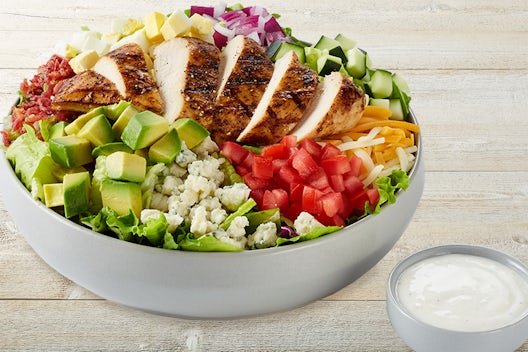
Million Dollar Cobb
Grilled chicken over mixed greens with hickory-smoked bacon, egg, tomato and blue cheese, finished with ranch.
 Salad & Bowls
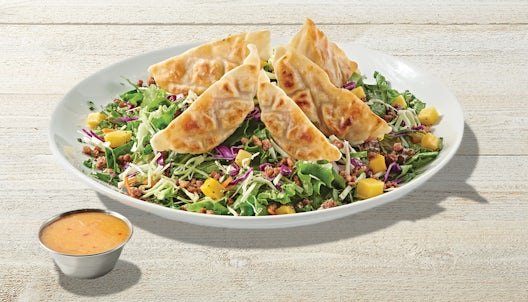
Thai Mango Salad
Pan-seared pot stickers over mixed greens with shredded cabbage and a mango vinaigrette.
 Salad & Bowls
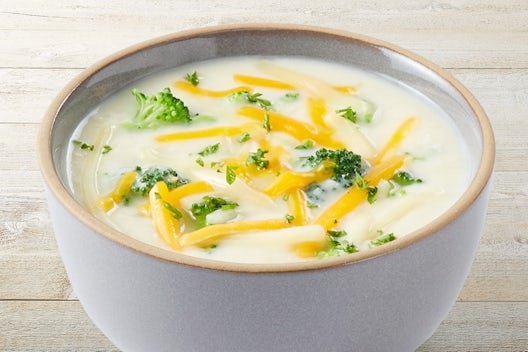
White Cheddar Broccoli Soup
A creamy white cheddar soup blended with broccoli.
 Salad & Bowls
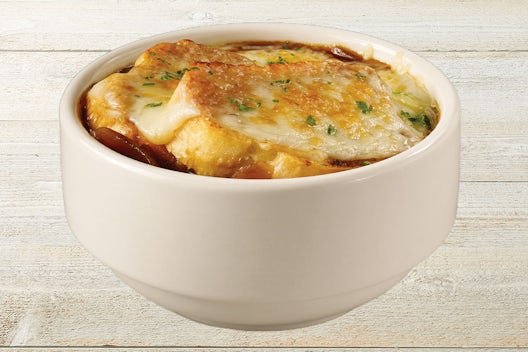
French Onion Soup
A savory bowl of slow-cooked caramelized onions in beef broth, finished with melted cheese.
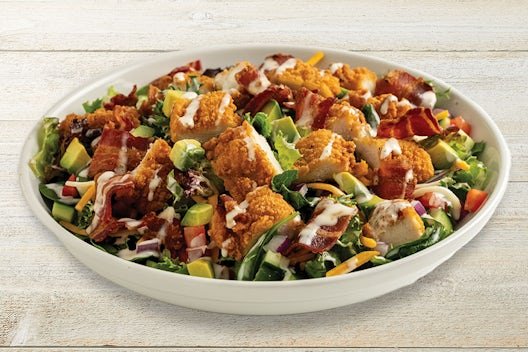 Salad & Bowls
Chicken Bacon Ranch Salad
Crispy or grilled chicken with hickory-smoked bacon and ranch over a fresh salad base.
Nutrient-Dense Bowls & Fresh Produce Breakdown
Most salad bowls are built on one of three bases.
Romaine and iceberg blends are crisp and mild. They hold dressing well and stay crunchy longer, which is why they're standard in Caesar-style bowls.
Mixed greens and spring mix bring more flavor and more nutrients, but wilt faster once dressed.
Spinach and kale bases are the sturdiest. Kale in particular can sit dressed for a while without collapsing, which makes it the best choice for takeout.
Common add-ins include tomatoes, cucumbers, red onion, shredded carrots, corn, black beans, avocado, and roasted vegetables. Beans and avocado add real substance. Watery vegetables add volume without much else.
The toppings that quietly add the most calories are cheese, croutons, candied nuts, crispy onions, and bacon. None of them are a problem in small amounts, but three or four together add up.
House-Made Dressings & Flavor Profiles
| Dressing | Profile | Weight | Pairs with |
|---|---|---|---|
| Ranch | Creamy, herby | Heavy | Crisp lettuce, chicken |
| Blue cheese | Sharp, creamy | Heavy | Steak, buffalo chicken |
| Caesar | Salty, garlicky | Heavy | Romaine, grilled chicken |
| Balsamic vinaigrette | Tangy, slightly sweet | Light | Mixed greens, salmon |
| Honey mustard | Sweet, sharp | Medium | Crispy chicken |
| Lemon vinaigrette | Bright, acidic | Light | Seafood, spring mix |
| Southwest or chipotle | Smoky, spicy | Medium | Beans, corn, steak |
Creamy dressings carry the most calories and fat. Vinaigrettes are lighter, though sweet ones can carry more sugar than people expect.
A standard restaurant dressing serving is often enough for a much larger salad than most people realize. Asking for it on the side and using half is the single easiest change you can make.
Protein Additions: Grilled Chicken, Salmon & Steak
| Protein | Approx. calories per serving | Best with |
|---|---|---|
| Grilled chicken | 150 to 200 | Almost any bowl |
| Crispy chicken | 300 to 400 | Ranch, honey mustard |
| Grilled salmon | 250 to 350 | Lemon or balsamic |
| Grilled steak | 250 to 350 | Blue cheese, chipotle |
| Grilled shrimp | 100 to 150 | Light vinaigrettes |
| Blackened chicken | 180 to 230 | Southwest dressings |
These are general ranges for typical restaurant portions, not exact figures for any specific menu item. Check your location's nutrition information for precise numbers.
Grilled chicken and shrimp give the most protein for the fewest calories. Crispy chicken roughly doubles the calorie load compared with grilled, mostly from breading and oil.
For a filling bowl that stays light, grilled protein plus beans or avocado works better than adding cheese and croutons.
Calorie & Macro Guide for Health-Conscious Diners
A rough way to estimate a salad bowl:
- Greens and plain vegetables: 50 to 100 calories
- Grilled protein: 150 to 350 calories
- Dressing, full serving: 150 to 300 calories
- Cheese: 80 to 150 calories
- Croutons or crispy toppings: 100 to 200 calories
- Avocado: 80 to 120 calories
Four changes that cut the most without ruining the bowl: dressing on the side, skip croutons, choose grilled over crispy, and hold or halve the cheese.
For higher protein, add a second protein rather than more toppings. For lower carbs, drop croutons, corn, and sweet dressings.
Nutrition information for chain restaurants is published by the brand and can change with recipe updates, so use posted values rather than estimates when it matters.
Frequently Asked Questions (FAQs)
Yes, dressing on the side is a standard request and available at no extra cost. It also helps with takeout, since dressed greens wilt within about 15 to 20 minutes. Most people use noticeably less dressing when it comes separately.
Grilled chicken, crispy chicken, grilled shrimp, salmon, and steak are the usual options, with prices varying by protein. Some locations also offer blackened seasoning at no extra charge. Availability differs by store, so check the local menu.
It depends on the location and the specific dressing. Some are prepared in-house daily while others come pre-made. If ingredients matter for allergies or dietary reasons, ask the restaurant for the ingredient list rather than assuming.
Bowls built on greens with grilled protein, cheese, avocado, and an oil-based or ranch dressing are the closest fit. Skip croutons, corn, beans, candied nuts, and sweet dressings, which carry most of the carbohydrates in a typical salad.
Some bowls can be made vegan by removing cheese and choosing a vinaigrette instead of a creamy dressing. Check whether the base dressing contains dairy, eggs, or anchovies, since Caesar and ranch styles usually do. Confirm with the restaurant before ordering.
Getting the Most From a Salad
Order the bowl you actually want, then adjust two things: dressing on the side and grilled instead of crispy. That's most of the difference between a light meal and an entree-sized one, without giving up anything you'd miss.