Stacked Burgers & Gourmet Sandwiches
10 items in this category.
Burgers and sandwiches are the most customized part of any casual dining menu. Same base, different bun, different patty, different toppings, and the result changes completely.
This page covers what goes into a restaurant burger, how signature stacks differ from classic lunch sandwiches, which swaps are usually allowed, and how to build a full meal without overloading the plate.
Burgers/Sandwiches Menu
Burgers/Sandwiches
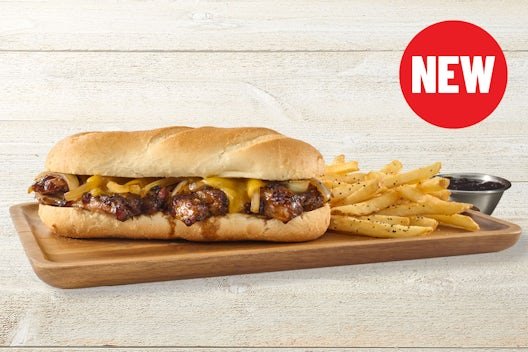
The FRRIB Sandwich
Slow-cooked Big Ribs pulled and piled onto a sandwich.
 Burgers/Sandwiches
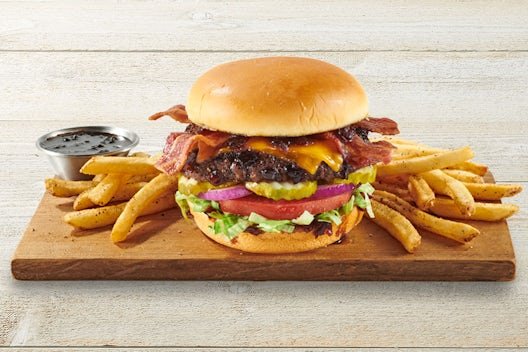
FRIDAYS™ Signature Whiskey-Glaze Burger
Hickory-smoked bacon, cheddar, lettuce and tomato finished with our whiskey glaze.
 Burgers/Sandwiches
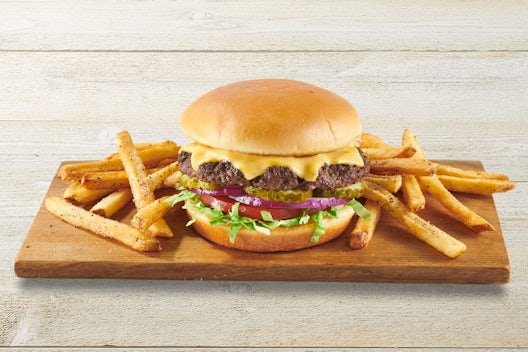
Cheeseburger
American cheese, lettuce, tomato, red onion and pickles on a classic beef patty.
 Burgers/Sandwiches
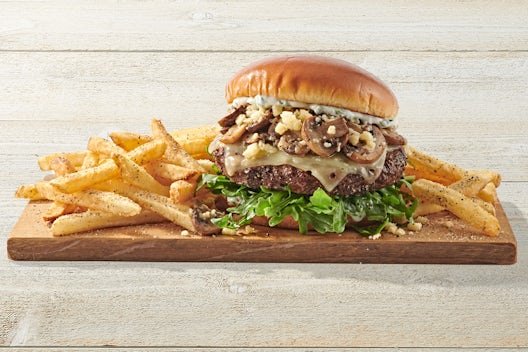
Truffle Mushroom Burger
Truffle aioli, roasted mushrooms, melted Swiss and arugula stacked on a burger patty.
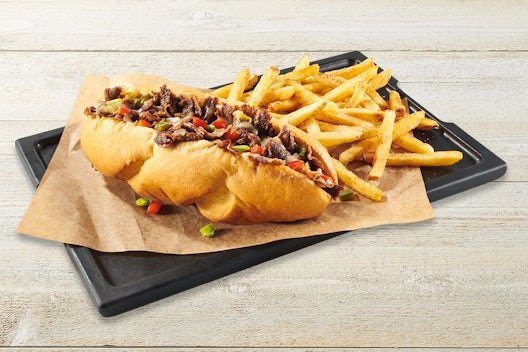 Burgers/Sandwiches
Philly Cheesesteak Sandwich
Thin-sliced steak with onions, peppers and provolone, built Philly-style.
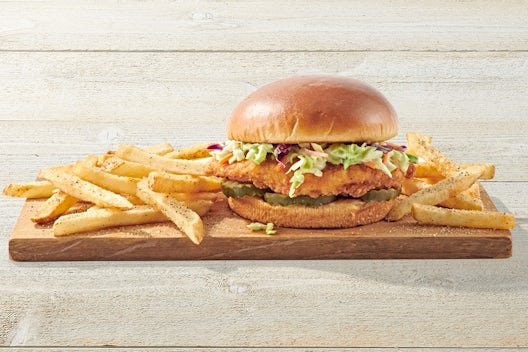 Burgers/Sandwiches
Fridays Crispy Chicken Sandwich
Crispy chicken breast with pickles and TGI sauce over lettuce.
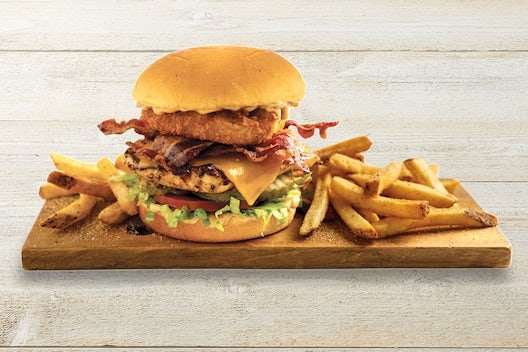 Burgers/Sandwiches
FRIDAYS™ Signature Whiskey-Glazed Chicken Sandwich
Two grilled 5 oz chicken breasts with garlic-butter broccoli, built for a hearty appetite.
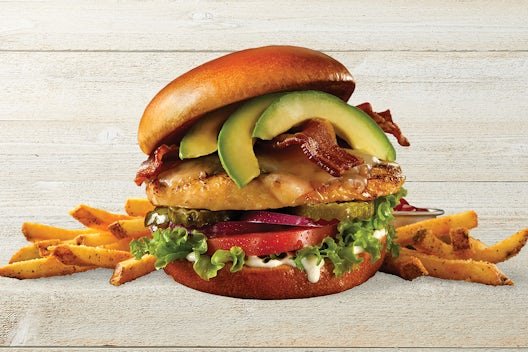 Burgers/Sandwiches
Bacon Ranch Chicken Sandwich
Grilled chicken breast with hickory-smoked bacon, provolone and avocado.
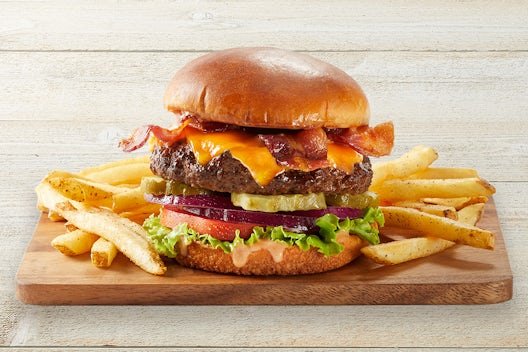 Burgers/Sandwiches
Bacon Cheeseburger
Hickory-smoked bacon, cheddar, lettuce and tomato piled on a classic beef patty.
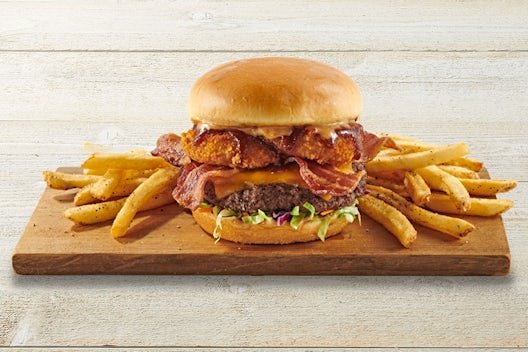 Burgers/Sandwiches
Texas BBQ Bacon Cheeseburger
BBQ sauce, hickory-smoked bacon and cheddar bring Texas flavor to this burger.
Quality Ingredients: Fresh Patties & Brioche Buns
A restaurant burger comes down to three things: the patty, the bun, and the build order.
Patty size on casual dining menus usually runs from a third of a pound up to half a pound for signature stacks. Thicker patties hold more juice, which is why bigger burgers tend to taste better even when the seasoning is identical.
Bun choice does more work than people give it credit for. Brioche is soft and slightly sweet, which suits rich toppings like bacon and barbecue sauce. A sesame or potato bun is sturdier and better under wet toppings. Pretzel buns hold heavy stacks without falling apart.
Build order matters for takeout. Sauce placed directly against the bun soaks it fast. Lettuce or cheese acting as a barrier keeps the bread intact longer, which is why some kitchens layer differently for delivery orders.
Chicken sandwiches follow the same logic, except breading replaces the patty as the texture element. Grilled chicken sandwiches need a wetter sauce to stay from going dry.
Signature Stacks vs. Classic Lunch Sandwiches
| Feature | Signature stack | Classic sandwich |
|---|---|---|
| Patty or filling | Larger, often double | Standard single |
| Toppings | Multiple, layered | Two or three |
| Bun | Brioche or specialty | Standard |
| Portion | Full dinner size | Lunch size |
| Best for | Big appetite, dinner | Quick meal, lunch |
| Price | Higher | Lower |
Signature stacks are built to be photographed and shared. They come loaded, and they're hard to eat neatly. Order one when you're sitting down with time.
Classic sandwiches are simpler and faster. Club sandwiches, grilled chicken, patty melts, and BLT-style options fall here. They travel better and cost less.
If you want the flavor of a signature burger without the size, ask whether a single-patty version exists. Many kitchens will make it.
Customization Guide: Buns, Cheeses & Lettuce Wraps
Swaps most locations accept:
- Bun type, where alternatives are stocked
- Cheese type: American, cheddar, Swiss, pepper jack, blue cheese
- Patty type: beef, grilled chicken, crispy chicken, turkey, plant-based
- Lettuce wrap or bunless plate instead of bread
- Toppings added or removed
- Sauce swapped or served on the side
- Cook temperature on beef patties, at locations that allow it
Swaps that usually cost extra: a second patty, bacon, avocado, extra cheese, and premium bun upgrades.
For lower-carb ordering, a lettuce wrap removes most of the carbohydrate load. A bunless plate with a side salad goes further.
For plant-based patties, ask how they're cooked. If the kitchen uses the same grill surface as beef, a strict vegetarian may want to know before ordering.
Frequently Asked Questions (FAQs)
Most locations offer at least one alternative patty, commonly a plant-based option and sometimes grilled chicken or turkey. Swaps may carry a price difference. Availability varies by store, so confirm on your local menu before ordering.
Usually yes, fries are the default side on most burgers and sandwiches. Premium sides like onion rings or loaded fries typically cost extra. A few promotional or lunch-priced items may be sold without a side, so check the description.
Signature burgers commonly use brioche or a similar soft, slightly sweet bun, since it holds up under heavy toppings. Classic sandwiches often use standard sesame, potato, or toasted bread. Bun options vary between locations and specific menu items.
Yes, lettuce wraps are a common request and most kitchens accommodate them at no extra charge. You can also ask for the burger served bunless on a plate with a side salad, which is easier to eat than a wrap.
Extra toppings such as bacon, cheese, avocado, jalapeños, and grilled onions are generally available for an added charge. Free adjustments usually include removing toppings or moving sauce to the side. Prices for add-ons are set by location.
Building a Better Order
Match the bun to the toppings and the side to the patty. A loaded double stack with a fresh side beats a loaded stack with loaded fries, and it's the difference between finishing the plate and giving up halfway.